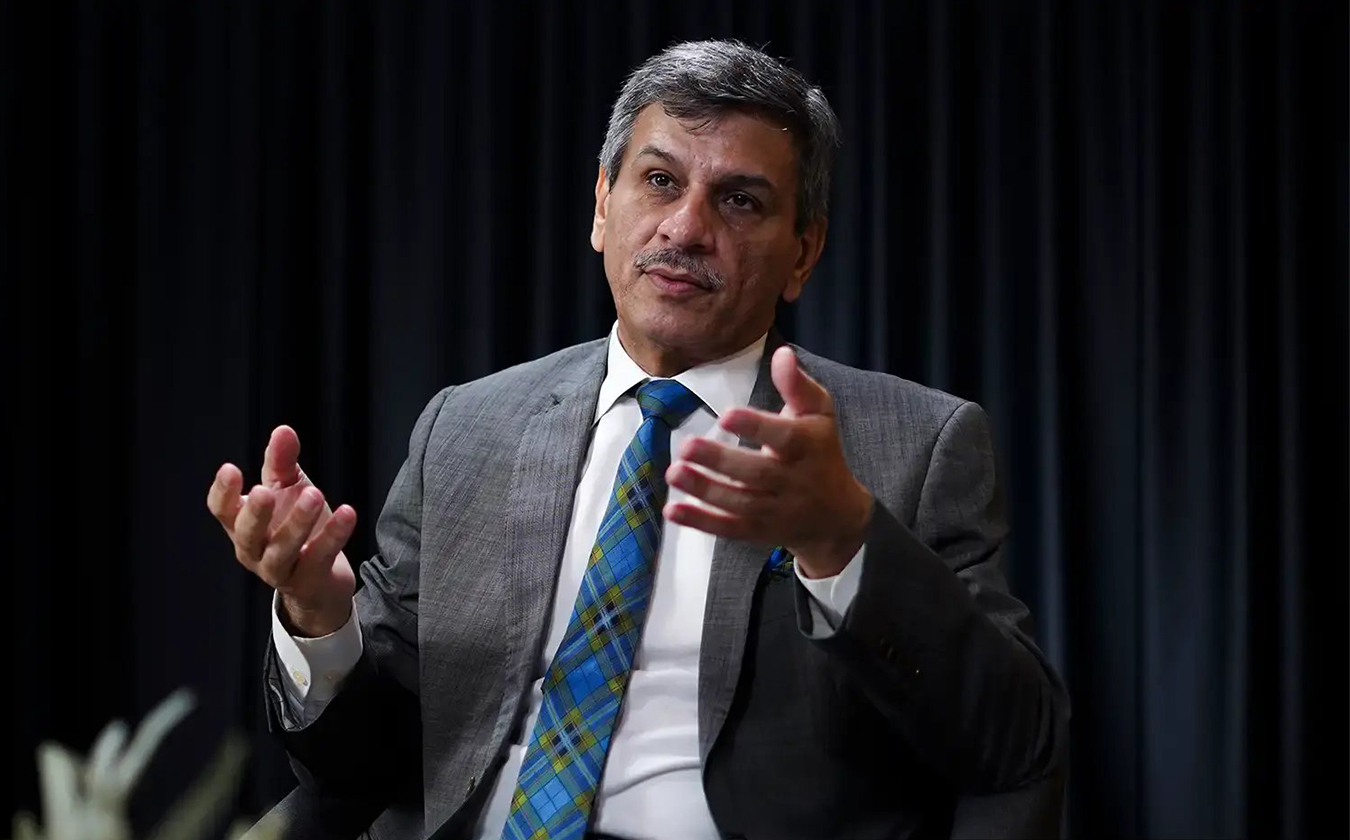

National Education Leadership Institute (Minda-UKM) deputy director Dr Anuar Ahmad said the government must focus on four priorities, namely empowering teachers, upgrading school infrastructure, improving student welfare and preparing pupils for the digital era through Science, Technology, Engineering and Mathematics (STEM) and artificial intelligence (AI).
“To build a quality education system and ensure children learn effectively, everything depends on the quality of teachers,” he told The Malaysian Reserve (TMR).
He said next year’s budget must address teacher shortages, particularly in English, Mathematics and Science, while reducing the number of students per classroom.
“With a larger budget, we can reduce class sizes so that teachers can teach more effectively,” he said.
Anuar said Malaysia currently has about 450,000 teachers at various stages of service, many of whom were trained more than a decade ago.
He said this calls for systematic retraining to equip educators with digital and AI-related skills that align with today’s teaching needs.
He added that while expanding teacher numbers is vital, the government should also hire more administrative and support staff to ease the non-teaching workload.
Many teachers, he said, are overwhelmed by clerical duties, event coordination and data reporting, leaving less time to focus on teaching.
Upgrading facilities and ensuring safety
Anuar said school development must be another priority for Budget 2026, especially given that many buildings were constructed 40 to 50 years ago.
He said additional funds are needed to repair ageing infrastructure, add classrooms and build new schools in high-density and newly developed areas.
He also called for a special allocation to install closed-circuit television (CCTV) systems nationwide.
“CCTV should be available in every school so that our children’s safety can be properly monitored,” he said, adding that such upgrades would reassure parents and help prevent bullying and disciplinary issues.
He explained that the budget should also enhance student welfare through better nutrition and health services.
Anuar proposed increasing allocations for the Supplementary Food Programme and School Milk Scheme, especially for children from B40 and large M40 families, and improving school-based dental and health facilities.
He also highlighted declining participation in STEM education, saying the government must rekindle interest among pupils from the primary level.
“The government must allocate special funding to encourage more students to pursue Science and Mathematics,” he shared with TMR.
On AI readiness, Anuar said both schools and teachers are still ill-prepared.
“Our schools and teachers are not yet ready when it comes to AI,” he said.
He added that targeted funding is needed to improve internet speed, provide teaching materials and train educators to introduce AI literacy in the classroom.
Similarly, Vice-Chancellors Council for Private Universities (VCCPU) chairman and Heriot-Watt University Malaysia CEO Professor Mushtak Al-Atabi said Budget 2026 should mark a turning point for higher education.
“Budget 2026 should not only maintain funding levels but set clear priorities to nurture graduates who are innovative, inclusive and resilient,” he said in a statement.
Mushtak said Malaysia’s education sector has reached a stage where maintaining the status quo is not enough.
He said the country must channel investments towards digital transformation, inclusion and internationalisation to stay globally competitive.
He proposed targeted incentives to attract more international students, particularly to private universities, saying this would strengthen Malaysia’s position as an education hub and stimulate economic growth.
He also urged more funding for “blue-sky” research, which are exploratory studies that may not offer immediate returns but create long-term value.
“It is through this type of work that Malaysia can transition to a knowledge-driven economy,” he said.
Mushtak said inclusivity should also be central to policy design, with more attention given to neurodiverse and disabled learners.
He added that a unified quality framework would help align Malaysian higher education standards with global benchmarks, improving graduate employability.
He said more investment is also needed in smart campuses and virtual learning environments to ensure students are ready for the changing world of work.
Meanwhile, University of Cyberjaya vice-chancellor Professor David Whitford said Budget 2026 represents a strategic opportunity for Malaysia to reaffirm its priorities for education and national progress.
“These investments create pathways for deserving students, regardless of background, to access opportunity and contribute to Malaysia’s knowledge economy,” he said, referring to the RM4 billion in scholarships, loans and allowances, including RM500 million for STEM-related studies.
Whitford said the RM600 million set aside for research and development covering AI, semiconductor and healthcare innovation, signals a clear shift towards strengthening Malaysia’s innovation ecosystem.
He said universities must work closely with industry and government to ensure effective implementation.
“Success will depend on active collaboration between industry, communities and government at every level,” he added.
Whitford also noted that increased infrastructure investment in Sabah, Sarawak and underserved regions shows a growing national commitment to reducing education inequality.
Collectively, the experts said Budget 2026 must be seen as a reform platform rather than a spending exercise.
From empowering teachers and improving school facilities to expanding research and digital learning, they said Malaysia’s education future depends on sustained, well-directed investment.
“By championing merit, fostering diversity and nurturing a future rooted in knowledge, integrity and inclusive growth. Malaysia can set a bold standard for generations to come,” Whitford said.
Meanwhile, the Higher Education Ministry is expecting a larger budget to fund reforms outlined in the Malaysia Higher Education Plan 2026–2035, The Star reported.
Minister Datuk Seri Dr Zambry Abd Kadir said the new allocation would strengthen governance, research capacity and international collaboration within Malaysia’s university system.
He said education traditionally commands the largest share of federal spending, and the ministry anticipates a similar commitment next year to match policy ambitions under the new roadmap.
Zambry said the plan will include measures to enhance institutional quality while positioning Malaysian universities as globally recognised learning centres.
He was speaking after officiating at the Global Educator Award (GEA) 2025 at Universiti Pendidikan Sultan Idris (UPSI) in Tanjong Malim on Saturday.

PROF MUSHTAK AL-ATABI
Provost and chief executive officer
Heriot-Watt University Malaysia;
Chairman Vice Chancellors’ Council for Private Universities